
A Community Guide to the University
You don’t have to be a student to experience some of the best things that the University of Virginia has to offer. From concerts and championship athletics to public lectures, historic gardens, and museums, UVA offers area residents countless opportunities to learn, explore, and connect.
Cheer on the Cavaliers
Tickets aren’t needed to attend games for most of UVA’s 27 varsity teams (13 men’s and 14 women’s). While football, men’s and women’s basketball, baseball, and men’s lacrosse require paid admission, more than 100 home sporting events each year are free. That includes men’s and women’s soccer, women’s lacrosse, volleyball, softball, field hockey, swimming and diving, wrestling, tennis, track and field, golf, rowing, and squash. Most offer open seating, making them an easy outing for families, youth sports teams, or anyone looking to experience college athletics.
The Cavaliers consistently rank among the nation’s elite programs. UVA teams have won 37 NCAA team national championships, with recent titles in women’s swimming and diving, men’s tennis, and men’s lacrosse, along with memorable championships in men’s basketball and baseball.
Schedules, tickets, and parking information are available at virginiasports.com.
Stroll the Pavilion Gardens
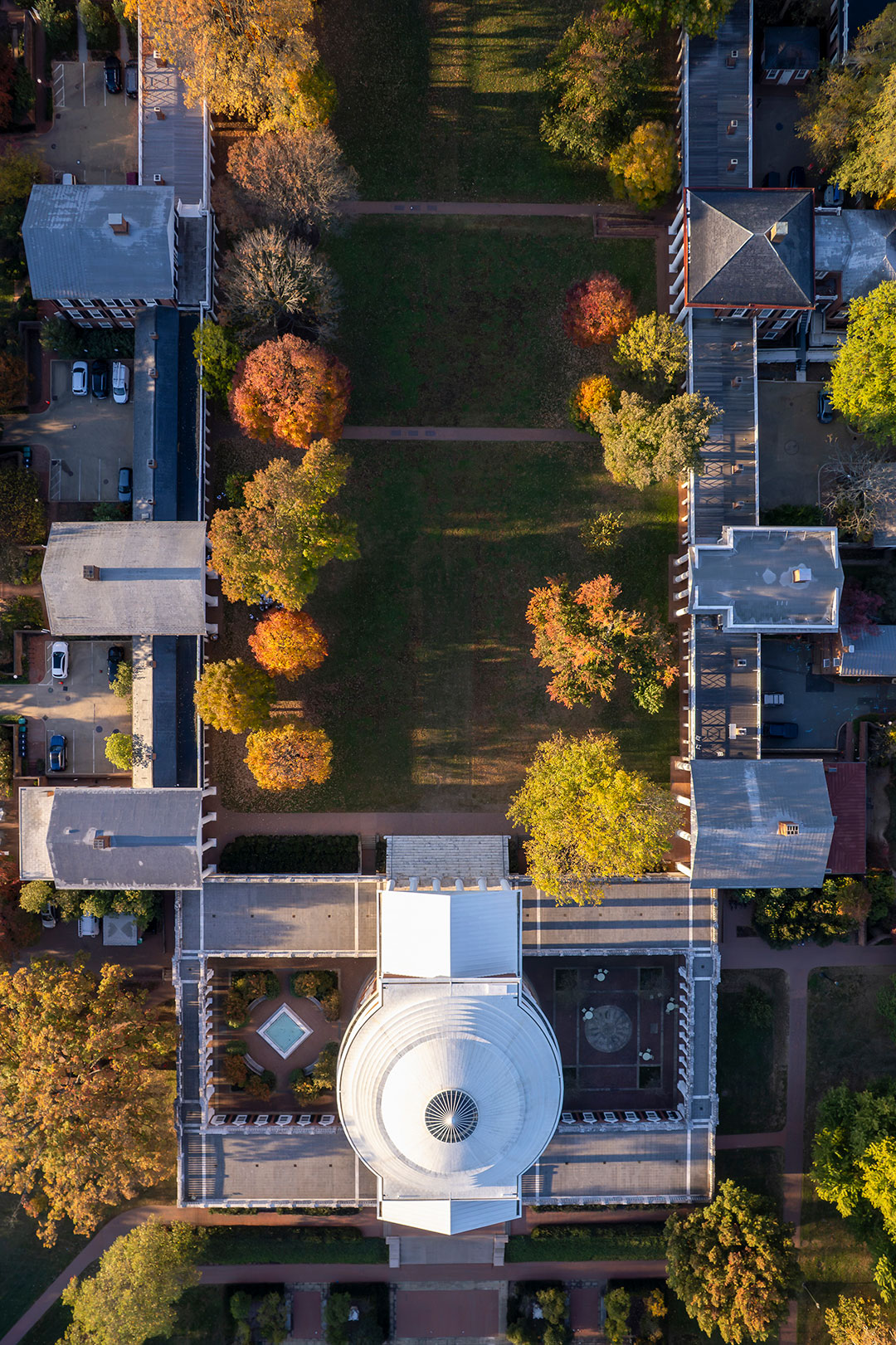
The Pavilion Gardens are among the most beautiful places on Grounds. Designed as part of Thomas Jefferson’s original Academical Village, these walled gardens once served as working yards for faculty homes and student boarding houses. In the mid-20th century, the Garden Club of Virginia helped transform the spaces into the formal gardens visitors enjoy today while preserving Jefferson’s distinctive serpentine brick walls. Each garden has its own character, with winding paths, flowering trees, boxwood, and seasonal plantings.
Six lower gardens, located behind Pavilions I, II, V, VIII, IX, and X, are open to the public whenever they aren’t reserved for weddings or other events. The upper terraces remain private, but the lower gardens are free to explore.
Explore the Pavilion Gardens for their history, landscape design, or simply as a peaceful place for a stroll or a quiet moment on a bench.
Look to the Stars
The Leander McCormick Observatory is home to one of the largest and oldest telescopes in the United States, a 26-inch refractor dating back to the 1880s. On the first and third Friday “Public Nights,” volunteers from the Department of Astronomy and local astronomy clubs host visitors for an evening that includes a brief introduction to the evening’s astronomical sights, a tour of the historic building, and, weather permitting, opportunities to view the night sky through the impressive refractor and smaller, modern telescopes set up on the grounds. Glimpse the rings of Saturn, the craters of the Moon, or star clusters and nebulae that are barely visible to the naked eye. This free program has limited space, and tickets are released online on the first business day of each month. Tickets are free, but they’re typically gone within hours, so mark your calendar.
astronomy.as.virginia.edu/public-nights-mccormick-observatory
Explore the Fralin
Admission to the Fralin Museum of Art is always free, making it easy to explore rotating exhibitions throughout the year. This fall, the museum presents Legacies of Independence (August 29 through January 3), featuring four exhibitions that examine Thomas Jefferson’s legacy through both historical and contemporary perspectives. Highlights include a site-specific installation by internationally acclaimed Beninese artist Georges Adéagbo and a rare 19th-century Native American painting depicting Jefferson and his descendants.
Another popular way to experience the museum is during Final Fridays, a tradition that has welcomed students and the Charlottesville community for decades. Held on the last Friday of each month during the academic year, the free evening event features art, live music, food, hands-on artmaking, and student docent-led gallery talks. The museum remains open until 8 p.m. for Last Fridays, and everyone is welcome.
uvafralinartmuseum.virginia.edu
Learn from the Experts
Some of UVA’s best classrooms don’t require enrollment. Throughout the year, the University hosts free public lectures, panel discussions, and educational programs that bring leading scholars, physicians, scientists, historians, and policy experts together with the community.
Among the most distinctive is the Last Lecture Series, now in its 33rd year, where accomplished faculty members gather in the Rotunda’s Dome Room to deliver the lecture they would choose if it were their last. The Lifetime Learning program also offers a steady calendar of talks, including the popular More Than the Score series before home football games, where professors share their research in engaging, accessible ways.
Other opportunities include public programs from the Karsh Institute of Democracy, the Center for Politics, and the Institute for Advanced Studies in Culture. Many events are free, open to the public, and livestreamed or recorded, making it easy to learn from some of the University’s leading thinkers.
Lifetime Learning: engagement.virginia.edu/learn
Karsh Institute of Democracy (Democracy360 and Touchstones): karshinstitute.virginia.edu
UVA Center for Politics / Sabatos Crystal Ball events: centerforpolitics.org
Institute for Advanced Studies in Culture public forums: iasculture.org/events
Escape to Morven
The University of Virginia’s Morven Sustainability Lab in southeastern Albemarle County offers students and locals a year-round escape. This former farm now serves as a living classroom, integrating historic gardens, forest trails, and a student-run kitchen garden to explore sustainability, wellness, and local history. Throughout the seasons, visitors come to walk the paths, reflect in the formal and Japanese-inspired gardens, or enjoy a quiet workday with views of the Blue Ridge foothills, a welcome alternative to a typical office environment.
On select Fridays, Morven hosts informal retreat-style days, allowing guests to roam, read, or work remotely in a peaceful 7,000-acre rural setting. The Morven Kitchen Garden is central to many activities, providing seasonal produce shares and regular volunteer workdays where community members learn about regenerative agriculture while planting, weeding, and harvesting. Morven rewards repeat visits, with different corners of the property and new programs coming to life at different times of year.
morven.virginia.edu
Take in a Performance
Some of Charlottesville’s best live performances take place on the Grounds. Throughout the year, the University presents hundreds of concerts, plays, musicals, dance performances, and student recitals, many of them free and others priced well below what you’d expect to pay for performances of this caliber.
Spend an evening with the Charlottesville Symphony at the University of Virginia in Old Cabell Hall, discover an emerging musician at a student recital, or catch a mainstage production in one of the Drama Department’s theaters. Faculty artists, guest performers, and talented students share the stage, creating a lineup that ranges from classical music and jazz to Shakespeare, contemporary plays, and original works.
Whether you’re a regular arts patron or simply looking for an affordable night out, UVA’s performing arts calendar offers exceptional quality and remarkable variety throughout the year. Browse upcoming events through the UVA Arts calendar and Arts Box Office.
arts.virginia.edu/calendar
artsboxoffice.virginia.edu
Reflect at the Memorial to Enslaved Laborers
Just east of the Rotunda, the Memorial to Enslaved Laborers honors the estimated 4,000 to 5,000 enslaved African Americans whose labor built and sustained the University of Virginia from its founding through the Civil War. Completed in 2020 after years of collaboration among students, faculty, community members, and descendants, the memorial invites visitors to reflect on a vital part of UVA’s history.
The circular monument is formed from Virginia Mist granite and set into the landscape, creating a quiet space for walking, reading, and contemplation. Its smooth inner wall is inscribed with a timeline of slavery at UVA, the names and biographies of known enslaved individuals, and thousands of memory marks representing those whose identities have been lost to history. The memorial offers one of the University’s most meaningful places to honor the people whose work helped make UVA possible.
Check Out the Libraries
UVA Libraries are open to the community in more ways than many people realize. Local residents aged 16 and older can register for a free community library card, allowing them to borrow books and other materials, use library spaces, and access most research databases while on site.
The Albert and Shirley Small Special Collections Library is worth a visit even if you aren’t conducting research. Its free exhibitions change regularly, showcasing rare books, manuscripts, maps, photographs, artwork, and artifacts drawn from one of the nation’s premier university collections. The displays often explore Virginia history, literature, politics, science, and UVA’s past through materials rarely seen by the public.
Throughout the year, the libraries also host free lectures, tours, and special events tied to exhibitions and community celebrations.
From local history research to quiet reading spaces and rotating exhibits, UVA Libraries are some of Charlottesville’s richest cultural experiences.
library.virginia.edu
Find Your Calm
Opened in 2024, the Contemplative Commons is a collaborative effort between the Contemplative Sciences Center and other university partners. Dedicated to mindfulness, movement, and contemplative research, it offers a light-filled, flexible space with studios, classrooms, and informal gathering areas. These spaces support a wide range of activities, from yoga and meditation to interdisciplinary courses and public talks. The Commons aims to integrate contemplative practices into the daily lives of students, faculty, staff, and Charlottesville residents, fostering new ways of learning, working, and relating to one another.
Beyond free drop-in sessions like Midday Mindfulness, Ashtanga classes, and Friday Rest Fest, the Commons regularly hosts courses in contemplative studies, teacher training, and research projects focusing on topics such as attention, compassion, and resilience. Monthly public salons also bring together scholars, artists, and scientists with the community. These accessible, conversational events explore the intersection of contemplative practices with science, education, and social issues.
csc.virginia.edu
Trick-or-Treat on the Lawn
What began in the late 1980s as a Halloween outing for the children of UVA employees has grown into one of Charlottesville’s favorite family traditions. Each Halloween, thousands of children from across the region visit the University’s Lawn, where students in all 54 Lawn rooms greet trick-or-treaters with candy, costumes, and festive decorations.
The event is held during the late afternoon and early evening, making it especially welcoming for younger children. Student organizations donate thousands of pieces of candy, helping Lawn residents keep the treats flowing as families make their way from door to door beneath the Lawn’s iconic colonnades.
No registration is required, just arrive in costume and experience one of the University’s most beloved traditions. For many children, it’s their first chance to experience UVA, creating memories that last long after the candy is gone.